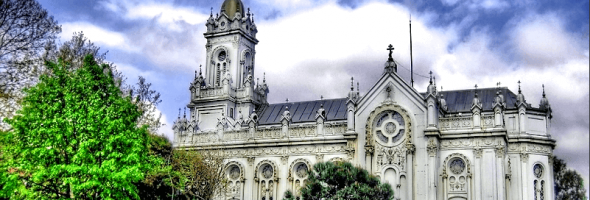
Experience the charm of Istanbul’s European side with our Golden Horn Tour. The Golden Horn divides the Historic Peninsula from Galata, which together constitute the European side of Istanbul. The Golden Horn is not only a natural harbor, but also a residential area comprising a number of historical districts, such as Fener, Balat and Eyüp.
Some of the most beautiful panoramic views of the city of Istanbul may be seen along the Golden Horn. The Marmara Sea forms a narrow strait towards its merging point with the Kagıthane Stream by entering the land through the historic peninsula shores, resulting in a natural harbor. Golden Horn was significant in terms of fishery, agriculture and transportation in the past. In referring to the “fertility” of the Bosphorus waters, the region has been called the “Golden Horn” since its first residential neighborhoods began to be established. Turkish, Greek, Armenian and Jewish people lived there side by side in Ottoman times. For that reason, the region is of major significance for the cultural heritage of Istanbul.
The shipyard on the Beyoglu side of the Golden Horn and the industrial facilities subsequently built around this shipyard had temporarily turned the whole region into a factory site. The Golden Horn Bay, that had previously hosted various rarely seen sea life and had been the spawning ground of many fish species of the Marmara Sea, is attracting fishermen once again.
A Journey Through Time
The most reasonable route for a Golden Horn Tour is to start from the Eminönü side of the historic peninsula toward the northern part. Along this route, the first noticeable building is the historical cigarette factory building which today is used as a university campus. When following the shoreline, fish restaurants are seen. Following the clean-up of the bay, these restaurants became points of attraction once again. Some historical buildings, which had become derelict in time were restored and are now fish restaurants. In these restaurants, you can find various traditional appetizers as well as fresh and delicious seafood.
Continuing along this route during our Golden Horn Tour, you arrive at the district of Fener, or “beacon.” This district, which was added to the World’s Cultural Heritage List by UNESCO in 1988, was named after the oldest and most significant beacon on the Golden Horn Bay. While the district had been called “Fanarion” during the Byzantine period, it began to be known as “Fener” during the Ottoman period. Being one of the purest districts of Istanbul in terms of its historical structures hosting many historical churches, mosques and houses, Fener has begun to attract attention from people, especially the intellectuals of Istanbul since the late 1990s. The restored historical buildings were opened to residential use again.
More Than Just a Tour
The district of Balat, which is next to Fener, was also admitted to the World’s Cultural Heritage List by the UNESCO. With historical buildings remaining from the Byzantine and Ottoman periods, Balat and Fener can be likened to two old wise persons standing side by side on the southern shores of the Golden Horn. Balat, which is very similar to Fener in terms of its historical characteristics and architecture, is a district that has been inhabited by Jewish people since the Byzantine period. The houses located in Balat have distinct characteristics of the Old Istanbul houses. Balat had been a residential area, especially for the Jewish people who came from Spain in 1492 and from Portugal and Italy in 1497 to seek refuge in the Ottoman Empire.
The churches of the Armenians and Greeks who lived in Fener and Balat and the mosques and dervish lodges built by the Muslim Turks mainly after the 17th century, make Balat a region of multi-religious inhabitants and culture – much like a mini Jerusalem within Istanbul.
Join us on our Golden Horn Tour and immerse yourself in the rich tapestry of Istanbul’s history and culture. Book your private Golden Horn Tour today and let Istanbul Personal Tours guide you to a side of Istanbul that few ever see.